
by Atilio G Leveratto, AIA
Fútbol has been a constant thread throughout my life. What started as pure fun on local fields in Paterson, New Jersey, gradually became a powerful teacher, shaping how I understand teamwork, responsibility, and leadership. From club fútbol in my childhood neighborhood, to Don Bosco Tech High School, and eventually to Division II fútbol at NJIT, the lessons of the game have stayed with me long after I stepped off the field.
Early Years in Paterson: Falling in Love with the Game
My earliest fútbol memories are rooted in fun. Club fútbol in Paterson wasn’t about résumés or future careers—it was about playing, competing, and loving the game. We played because we couldn’t wait to get on the field. Every practice, every match, every touch of the ball made me want to play more.
Those early years built passion. They taught me creativity, instinct, and joy—how to play freely, how to trust your feel for the game, and how fútbol could bring people together regardless of background. That love for the sport became the foundation for everything that followed.
Don Bosco Tech: Learning Accountability

High school fútbol at Don Bosco Tech marked a turning point. This is where I truly began to understand accountability. Showing up mattered. Preparation mattered. Your performance didn’t just affect you—it affected your teammates.
This was where fútbol started to feel like a responsibility as much as a passion. Coaches expected discipline, teammates expected commitment, and you learned quickly that trust is earned through consistency. Balancing academics and athletics also became real here, laying the groundwork for the demands of college and professional life.
NJIT Fútbol and Architecture School (Division II)

Caption: NJIT Men’s Fútbol, late 1990s. Atilio Leveratto is pictured as part of the Division II squad and
served as team captain during his senior season in 1998.
At NJIT, I competed at the Division II level while simultaneously navigating the rigorous demands of architecture school. Each on its own was intense. Together, they required total focus, discipline, and time management.
Architecture school meant long studio hours, critiques, and constant problem-solving. Fútbol added daily training, matches, travel, and recovery. There was no shortcut—only structure, commitment, and efficiency.
In 1998, my final year at NJIT, I had the honor of serving as team captain. Leadership at that level wasn’t about authority—it was about setting the tone, keeping the team aligned, and making sure everyone understood their role within the larger system. It was one of the most challenging and rewarding experiences of my life.
Respect, Coordination, and Leadership on the Field

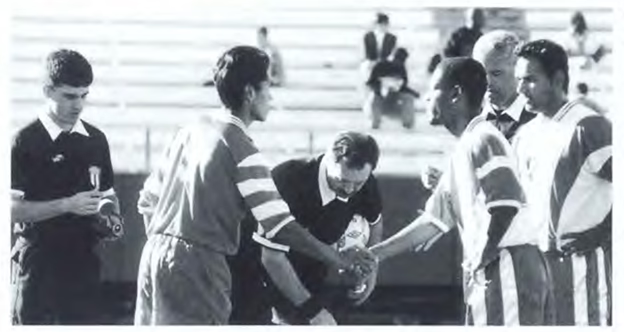
Caption: Pre-game moment during NJIT competition. Leadership, respect, and coordination were central
values of the program. Atilio Leveratto captained the team during his senior year.
Fútbol teaches coordination better than almost anything else. Eleven players moving as one—each decision affecting the whole. You learn to read space, anticipate movement, communicate without words, and trust others to do their job.
Those same principles apply directly to architecture.
Carrying the Lessons Forward
Today, as the owner of Leveratto Architecture Group, I see the influence of fútbol in my work every day. Architecture, like fútbol, is a team effort. No successful project happens in isolation—it requires alignment between designers, consultants, builders, and clients.
Fútbol taught me how to lead without ego, how to value every role on the team, and how accountability strengthens trust. The joy I found in the game early on reminds me why passion matters, while the discipline I learned later ensures that vision turns into execution.
It’s especially exciting to reflect on this journey now, living and practicing in New Jersey, a state that will help host the 2026 FIFA World Cup. The game that shaped me is returning to the spotlight in the very place where my career continues to grow.
As a member of the AIA New Jersey Chapter, it’s inspiring to see how sport, design, and community intersect—how global events like the World Cup elevate conversations about place, culture, and the built environment.
Fútbol may have started as a game, but its lessons continue to guide how I lead, design, and build—every single day.
Atilio G Leveratto, AIA
Leveratto Architecture Group
#Worldcup2026
#AIANJWorldCup2026

About the author: Atilio G. Leveratto, AIA
Founding Principal of Leveratto Architecture Group, Atilio has over 20 years of experience in Architecture and Design. He is known for his ability to help the most challenging projects become a reality and, in that process, develop strong relationships within the industry.
Atilio is also a current participant in the Latino Business Action Network (LBAN) Business Scaling Program at Stanford University, a prestigious initiative designed to support and empower Latino entrepreneurs. His involvement reflects a deep commitment to leadership, education, and the continued growth of Leveratto AG.
Atilio is happiest traveling with his wife to visit family and new cities, especially anywhere he can watch a great soccer game.
This blog story is part of our AIA-NJ 2026 World Cup initiative. If you have an interesting story about how the sport of soccer has played a part in your life or professional journey, please contact: Stacey Ruhle Kliesch, AIA, NJ CID, LEEP AP, AIA-NJ, Public Awareness Consultant, E: http://staceykliesch@gmail.com
Look for an AIA NJ World Cup Watch Party near you in Coming Events!