
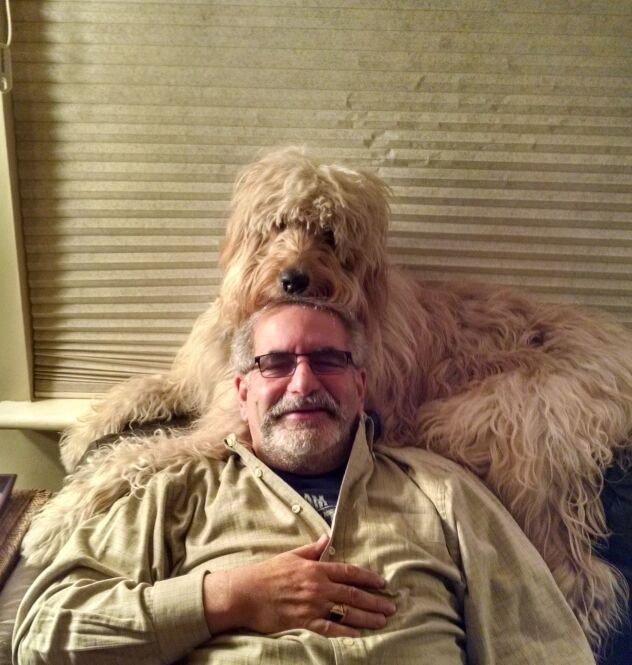
An Architect Who Believed in the Value of Architecture
Jerome Leslie “Jerry” Eben, FAIA, PP, CID — architect, advocate, mentor, educator, planner, preservationist, community leader and indefatigable champion of the profession — died September 21, 2026, at the age of 78.
For generations of New Jersey architects, Jerry Eben was more than a colleague. He was one of the people who made the AIA happen.
Jerry believed deeply in architecture, but he also believed in something equally important: architects had an obligation to participate. Participate in their professional organizations. Participate in their communities. Participate in government. Participate in educating the public. And, whenever necessary, participate in the sometimes baffling world of zoning, planning boards, regulations and municipal land-use law.
In other words, Jerry never seemed to believe that architects could simply sit in their offices and draw buildings.
A Life in Architecture
Jerry’s path to architecture began early. He recalled being inspired by architecture as a young student and ultimately earned his degree in architectural technology from the New York Institute of Technology. He became a licensed architect in 1984 and built a remarkably broad career.
His professional experience included work with Lehman Architectural Partnership, where he eventually became a partner; Toys “R” Us, where he was responsible for hundreds of Kids “R” Us and Babies “R” Us stores; Beth Israel Medical Center, where he served as architect and director of construction and coordinated a major expansion of the hospital; and numerous commercial, institutional and community projects.
He was also a licensed planner and certified interior designer in New Jersey, and his professional work extended into forensic architecture, construction-related litigation, planning and zoning.
That range was characteristic of Jerry. To him, architecture was never isolated from the realities of construction, business, law, government, or community life.
Jerry and the AIA
If Jerry had a second home, it was the American Institute of Architects.
He joined the AIA in 1972 and spent more than five decades serving the organization at the local, state and national levels. He served twice as president of AIA Newark & Suburban Architects, in 1994 and 2000, and served as president of AIA New Jersey in 2007.
He ultimately served in virtually every elected leadership position within AIA New Jersey and served as an AIA regional director from 2011 through 2013. His service took him to the national level as well, including work on AIA committees and the AIA Board of Directors.
In 2017, Jerry was elevated to the AIA College of Fellows — one of the Institute’s highest honors — in recognition of his contributions to architecture and the profession.
But titles and positions only tell part of the story.
Jerry was an AIA connector.
He introduced people. He brought young architects to meetings. He encouraged students to join. He remembered who was new in the room. He believed that the relationships created through professional organizations could change careers.
During his 2014 campaign for AIA national secretary, Jerry estimated that he had personally been responsible for bringing more than 500 people into the AIA over the course of his career.
That number sounds extraordinary until you knew Jerry.
Then it sounded entirely possible.
“Zoning Ridiculousness” — and Why Jerry Was Willing to Fight It
Jerry had a particular affection for one of the least glamorous aspects of architecture: zoning.
Or perhaps “affection” is not quite the right word.
He understood zoning.
He understood planning boards.
He understood municipal land-use law.
And he understood the special kind of architectural absurdity that can occur when a good design meets a regulation that seems to have been written without any understanding of how buildings actually work.
Jerry was willing to get into the weeds — sometimes very deep weeds — because he believed architects needed to be part of the conversation when regulations were created and interpreted.
His own community involvement reflected that philosophy. He served on the West Orange Planning Board and previously served on its Zoning Board of Adjustment. He also participated in broader discussions of New Jersey’s Municipal Land Use Law and represented the profession in government and public-policy conversations.
For Jerry, zoning was not simply an obstacle to getting a project approved.
It was a place where architects could demonstrate their value.
An architect who understands the code, the site, the community, the client’s needs and the intent behind a regulation can often see a solution where others see only a problem.
Jerry believed that was part of the job.
The Value of the Architect
At the heart of Jerry’s career was a simple conviction: architecture matters, and architects matter.
He was not shy about telling people why.
He believed the public needed to understand what architects actually contribute — not simply drawings, but judgment, responsibility, technical knowledge, design thinking, coordination, advocacy and the ability to bring many competing requirements together into a safe and meaningful building.
That message was not reserved for clients or government officials.
Jerry took it to schoolchildren.
For more than 25 years, he participated in architecture career programs in New Jersey schools. He encouraged students to look at the buildings around them, understand how buildings are made and consider architecture as a profession.
Working with fellow architect Jose Gennaro, he brought architecture and career education to schools with large Spanish-speaking and ESL populations. Their presentations explained everything from architectural education and licensure to the realities of working in a firm.
But Jerry wanted to teach something larger than “become an architect.”
He wanted young people to become citizen architects — people who noticed their built environment, understood the importance of good design and recognized the role buildings play in their communities.
He encouraged students to “look up.”
That may be one of the most fitting instructions Jerry could have left us.
Look up.
Look at the buildings.
Ask who designed them.
Ask why they work — or why they don’t.
Understand your community.
And understand that architecture is all around you.
Investing in the Next Generation
Jerry also understood that the future of architecture depends on giving young people a path into the profession.
His commitment to the AIA New Jersey Education and Scholarship Foundation reflected that belief. The Foundation provides scholarships to architecture students demonstrating achievement, talent and potential for success in the profession.
Jerry understood that an organization cannot simply celebrate the architects it has today. It must invest in the architects who will come next.
He mentored students, encouraged emerging professionals to become involved in the AIA and consistently promoted the idea that joining the profession also meant joining a professional community.
His advice to young architects was practical: find your local AIA, meet people, ask questions, get involved and build relationships.
It was advice Jerry himself had followed for more than 50 years.
A Community Architect
Jerry’s commitment extended beyond professional organizations.
In West Orange, he advocated for preservation and rehabilitation, participated in downtown revitalization efforts and served his community through planning and civic activities.
He understood that architecture is ultimately about people and place.
A building does not exist in isolation. It occupies a street, a neighborhood and a community. It affects the people who use it and the people who pass it every day.
That belief also explains why Jerry could move so comfortably between a national AIA meeting, a municipal planning board, an architecture school, a construction project and a sixth-grade classroom.
To Jerry, they were all connected.
A Legacy of Participation
Jerry Eben’s legacy is not simply a list of buildings, positions, awards or committee assignments.
It is the people he brought into the profession.
It is the students he encouraged.
It is the architects he introduced to one another.
It is the meetings he attended when someone else might have stayed home.
It is the municipal hearing where he patiently explained why a regulation made no sense.
It is the young architect who walked into an AIA meeting not knowing anyone and left with a mentor.
It is the scholarship student who received a little help at exactly the right moment.
It is the public-school student who looked at a building differently because Jerry told them to “look up.”
And it is the countless architects who became more engaged in their profession because Jerry believed they should.
AIA New Jersey honored Jerry throughout his career, including the AIA-NJ Distinguished Service Award, the AIA-NJ Eagle Award following his presidency, the Herman C. Litwack, FAIA Distinguished Service Award from AIA Newark & Suburban Architects, the Richard Upjohn Fellowship and, ultimately, elevation to the College of Fellows.
Those honors are important.
But Jerry’s real achievement may be that he never stopped believing the AIA could — and should — be useful to architects.
He believed professional organizations should advocate.
He believed architects should understand government.
He believed students deserved encouragement.
He believed communities deserved good architecture.
He believed the public deserved to understand the value of the profession.
And he believed architects had a responsibility to show up.
Jerry Eben showed up for more than five decades.
Now it is up to the rest of us to keep showing up.
Look up, Jerry. We will take it from here.
Please note the arrangements for Jerry:
His funeral will be held on Wednesday, 9/23 at 11 am
Temple B’nai Abraham, 300 Northfield Road, Livingston NJ 07039
with Burial immediately following at King Solomon Memorial Park, 550 Dwasline Road, Clifton NJ
In lieu of flowers, donations may be made to the AIA NJ Educational and Scholarship Foundation
and the Evi & Albert Meinhardt Fund For Learning at Temple B’nai Abraham in Livingston, tbanj.org/temple-funds.html
Thank you!
Photo is the property of Jerry’s estate: Jerry and his beloved pup, Archie, named for Jerry’s love of Architecture!